
Two books about Pharmaceutical Market Access are still on Amazon’s best-selling books
Jan 31, 2020
Despite the growing importance of Pharmaceutical Market Access (PMA), only two works on the subject can currently be found among Amazon’s 100 best-selling books on the pharmaceutical and biotechnology industry.

ISTANBUL - January 30, 2020 —
Authored by Prof. Albert Wertheimer and Dr. Güvenç Koçkaya, the twin volumes – ‘Pharmaceutical Market Access in Emerging Markets’ and ‘Pharmaceutical Market Access in Developed Markets’ – were published in 2016 and 2018 respectively.
PMA has become increasingly significant in recent years following the enactment of new government policies in both emerging and developing markets. Wertheimer’s and Koçkaya’s books promise to clarify this otherwise complex issue for students, academics, government officials and anyone involved in the global pharmaceutical market.
“Maximum patients, minimum restrictions and optimum prices”
According to the World Trade Organization, the term ‘market access’ means ‘to open markets for trade and improve transparency, reciprocity and non-discrimination in international trade’. But as the authors explain in the preface of their first book, market access for pharmaceuticals is considerably different than that applied to other products like clothing, cars and electronic appliances. They define PMA as “achieving the optimal price for a product or service and/or maximum reimbursement for the approved target population with no restrictions on funding for the medical technology”. Or as Dr. Koçkaya succinctly puts it, PMA aims to provide pharmaceutical companies with “maximum patients, minimum restrictions and optimum prices”.
The first book focuses on PMA in emerging markets in South America, Europe, Africa and Asia (including the Middle East), while the second focuses on developed markets, including the US, Canada, Japan and Australia, along with a handful of countries in Western Europe.
PMA concerns all segments of society
As the books explain, PMA not only affects pharmaceutical companies, but other social segments as well, including health professionals, patients and everyday consumers of pharmaceutical products. For example, although innovative treatments are constantly being developed by the medical industry, irreversible harm can be done if patients lack access to these treatments. And while physicians and public health workers generally want to provide their patients with the best treatments available, these good intentions are frequently thwarted due to imperfect government policies.
Published by SEEd Medical Publishers, both books are currently available on Amazon, where they rank among the top 100 best-selling books on the pharmaceutical and biotechnology industry. Both books are also available in Kindle and E-Book formats.
Albert Wertheimer is a professor of pharmacy economics at Florida’s Nova Southeastern University. Güvenç Koçkaya is the President of Health Economics and Policy Association, an Ankara-based non-government & non-profit association specialized in health economics and outcome research.
Contact Info:
Name: Tülay Genç
Email: Send Email
Phone: +90 (850) 885 12 55
Release ID: 88944673
More News

The A.I. Party House Where Networking Has a Dark Side
Group tech houses have proliferated across the San Francisco Bay Area in the artificial intelligence boom. One of the most prominent has also racked up an extensive police record.

⚡ Weekly Recap: Cisco 0-Day, AI Agent RCE, ClickFix Attacks, ClickFix Surge, and Browser Hijacks
A browser. A plugin. A package. A login screen. Normal stuff. That is basically the problem this week. The trouble keeps showing up inside things people already trust: code that takes a bad turn, old payloads coming back, exposed systems, weak checks, fake fixes, and attack paths that look almost too easy. Even the research side is getting messy, with more findings, more automation, and not

TASK#STOMP PowerShell Backdoor Steals Documents, Wi-Fi Passwords, and Clipboard Data
Cybersecurity researchers have disclosed details of a new campaign dubbed TASK#STOMP that delivers a PowerShell backdoor designed to harvest sensitive data from compromised hosts. The backdoor "automatically harvests and exfiltrates business documents, watches the filesystem for new files in real time, steals Wi-Fi passwords and clipboard contents, takes screenshots, and accepts arbitrary

Typhoon Dujuan tracking close to Tokyo triggers rare evacuation alert
More than 1.9 million people are under evacuation orders as Typhoon Dujuan batters Japan.

The science behind the catsuit: Experts reveal how Keely Hodgkinson's all-black speed suit helped propel her to victory
When middle-distance runner Keely Hodgkinson stormed to victory in London last week, the crowd were as wowed by her outfit as her performance.

As AI safety fears mount, can a US-China hotline prevent a global crisis?
The United States and China’s agreement to establish an official AI dialogue, including a proposed threat-notification system, marks a pragmatic step towards crisis prevention in their tech war, even as deep-seated divisions over chip access, model distillation and market dominance threaten to limit its impact, analysts said. Announced following high-level talks in New York on Sunday between US Treasury Secretary Scott Bessent, US Trade Representative Jamieson Greer and Vice-Premier He Lifeng,...

‘CMF becomes Indian’: Carl Pei announces Nothing’s India spin-off with local R&D and global ambitions
Nothing CEO Carl Pei has announced that CMF will spin out into a standalone, majority Indian-owned company with its headquarters and R&D operations in India. Nothing will retain a stake and provide engineering, software, supplier and global brand support as CMF expands its device portfolio.

Girls are better at paying attention from BIRTH! Study finds newborn girls can focus for longer than boys
Girls really are better at paying attention than boys, and the difference is clear right after birth.

Minute-by-minute, what would happen if the Yellowstone SUPERVOLCANO erupted
Experts have revealed a blow-by-blow account of what would happen if a Yellowstone super-eruption took place today.
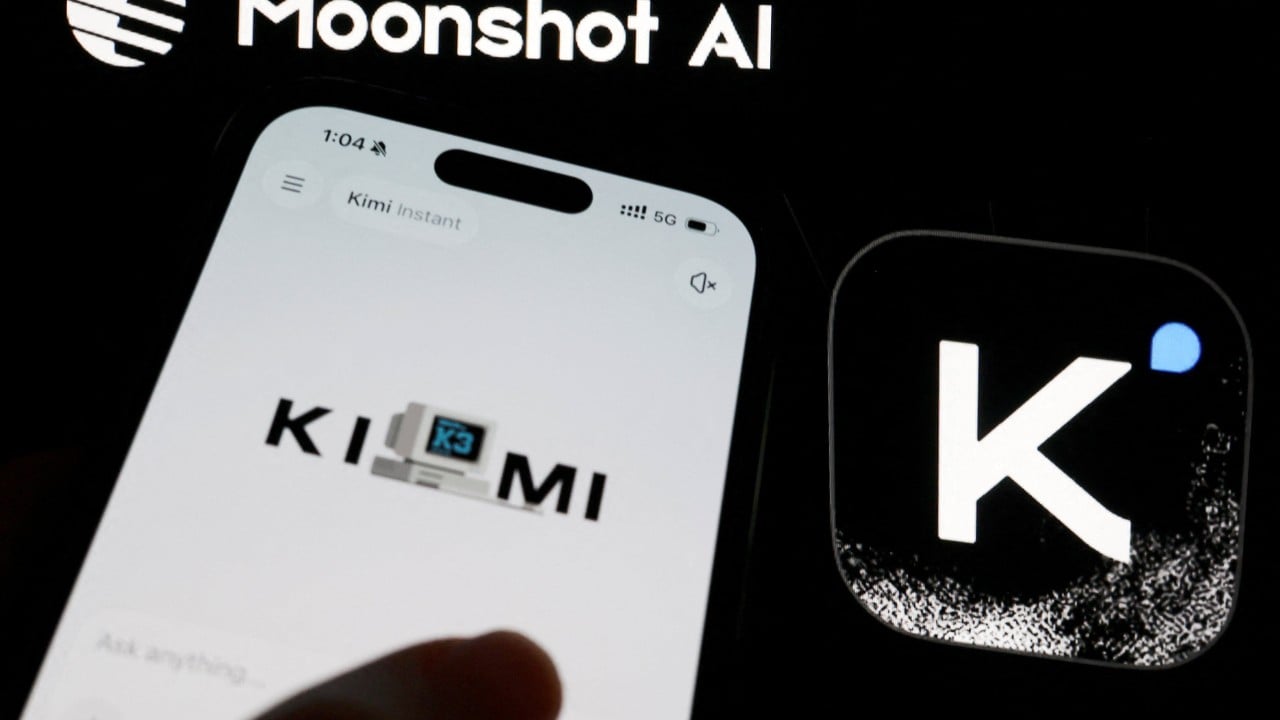
Moonshot’s Kimi K3 lands on Amazon in key test for Chinese open-source AI revenue
Chinese artificial intelligence start-up Moonshot AI has begun supplying its flagship Kimi K3 model to Amazon Web Services (AWS), one of the world’s largest cloud services providers, in a major test case for how open-weight AI models can generate higher revenue from third-party platforms. The model is now available on Amazon Bedrock, AWS’s tool for building generative AI applications, offering “a powerful new option for coding and knowledge work”, Amazon said in an announcement on Friday. While...

From ‘Make in India’ to ‘Engineer in India’: Nothing CEO Carl Pei makes his case
Nothing CEO Carl Pei says India can become a global electronics hub, but needs to shift from ‘Make in India’ to ‘Engineer in India’. He announced that CMF will become a standalone, majority-Indian-owned company, aiming to produce 100 million phones a year, built on real R&D, not just assembly.
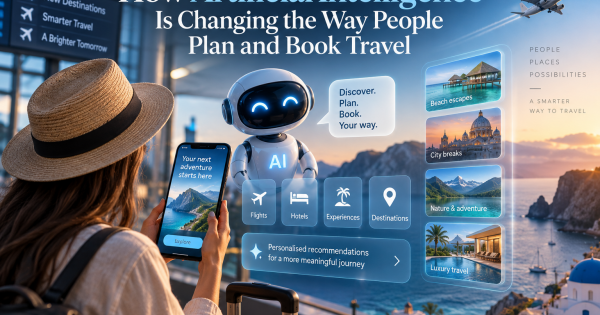
How Artificial Intelligence Is Changing the Way People Plan and Book Travel
AI’s become a genuinely visible part of travel planning now. Finding destination ideas, comparing hotels, building out an itinerary — all of it’s shifting how travelers actually search for and use information. Instead of relying purely on search engines, travel sites, guidebooks, or whatever a friend recommended once, people now use AI tools that chew through a ton of info and hand back personalized suggestions in seconds.
Recommended


Are A.I. Models Being Misled to Act Too Human?


YOUR NEWS, OUR NETWORK.
Do you have Great News you want to tell the world?
Be it updates about your business or your community, you can make sure that it’s heard by submitting your story to our network reaching hundreds of news sites across 6 verticals.