
Navigating Strict EU and US Retailer Compliance Standards with Union Source 8-Step QA QC
Nov 10, 2026

Ningbo, Zhejiang Nov 10, 2026 (Issuewire.com) - Supplying consumer merchandise to major supermarket chains, department stores, and multi-channel retailers in European and North American markets requires rigorous compliance governance. For retail brand buyers, compliance extends beyond confirming that a product functions correctly. Goods are required to satisfy mandatory chemical safety directives, ethical factory labor audits, transit durability criteria, and precise retail packaging standards before entering distribution networks.
In cross-border sourcing, compliance oversights introduce measurable commercial friction and administrative deductions. A missing country-of-origin marking, an unscannable barcode, an expired laboratory certificate, or unauthorized material substitutions during production can trigger immediate retailer inbound deductions, customs clearance delays, or costly inventory returns. Relying strictly on a single inspection at the factory gate right before dispatch often leaves buyers vulnerable, as critical structural and material defects are sealed inside finished packaging before inspectors arrive.
To manage quality risks systematically across multi-tier Chinese manufacturing networks, experienced buyers apply structured stage-gate protocols.
Here is an examination of how international retail compliance standards are maintained through a disciplined 8-step quality assurance and quality control (QA/QC) framework.
The 8-Step Quality Assurance and Control Framework
Preventing defects requires active verification across every stage of the manufacturing cycle, from initial supplier vetting to post-delivery feedback. The operational 8-step QC protocol traces product integrity through eight sequential milestones:
Step 1: Supplier Qualification and Compliance Vetting (Pre-Engagement)
Before production contracts are signed, candidate factories undergo thorough operational and ethical screening. Compliance teams audit business licenses, export tax histories, financial stability, and verified production capacity. Factory social responsibility records are authenticated directly on official databases, confirming valid amfori BSCI, Sedex (SMETA), or ISO 9001 certifications. Suppliers with consecutive failed compliance audits are systematically excluded from the authorized vendor network.
Step 2: Technical Specification and Tolerance Locking (Sample Stage)
Once a supplier is qualified, technical requirements are formally frozen into an approved technical pack. This document details native CAD dimensions, allowable manufacturing tolerances (typically ±0.5 mm for precision components and ±2.0 mm for consumer housewares and soft goods), Pantone color references, raw material compositions, and retail packaging dielines. Transforming subjective expectations into objective pass/fail metrics establishes a contractual baseline before sampling commences.
Step 3: Golden Sample Verification and Laboratory Testing (Pre-Production)
Physical golden samples are produced and subjected to comprehensive physical and laboratory testing. Spectrophotometers verify color accuracy against Pantone swatches, while mechanical tests confirm functional durability and closure integrity. When required by destination markets, samples are submitted to accredited laboratories to verify compliance with mandatory regulations, such as US FDA 21 CFR and German LFGB for food-contact items, European EN 71 and US ASTM F963 for toys, or REACH and RoHS for chemical limits. Approved golden samples are sealed and cataloged as physical reference standards for bulk manufacturing.
Step 4: Pre-Production Inspection (PPI at 10%-15% Raw Material Commitment)
When raw materials arrive at the factory and production commences with initial 10% to 15% material allocation, quality inspectors conduct on-site verification. Inspectors inspect plastic resin pellets, steel alloys, textile masterbatches, and electronic sub-assemblies to confirm they match the certified specifications of the approved golden sample. This early checkpoint serves a vital function in Chinese contract manufacturing: it intercepts unauthorized material substitutions before the bulk volume is committed.
Step 5: During-Production Inspection (DPI at 30%-50% Completion)
When manufacturing reaches 30% to 50% completion, inspectors execute in-line inspections. Using statistical sampling plans aligned with ISO 2859-1 (AQL sampling standards), inspectors evaluate components straight from active injection, stamping, and assembly lines. Workmanship defects are classified as Critical, Major, or Minor. If defect rates exceed agreed AQL thresholds, production is paused immediately, root causes are evaluated, and corrective action plans (CAP) are implemented on the factory floor.
Step 6: Final Random Inspection (FRI at 100% Production Completion)
Once bulk production is fully finished and at least 80% of goods are packed into master export cartons, formal pre-shipment inspections are conducted. Inspectors draw representative samples according to ISO 2859-1 General Inspection Level II. The inspection evaluates visual aesthetics, dimensional repeatability, functional performance, barcode scannability, drop durability, and packaging integrity. Lots failing AQL criteria are placed on formal hold for factory sorting, rework, or re-inspection.
Step 7: Pre-Shipment Audit and Container Loading Supervision (PSA at Consolidation Hub)
For multi-vendor consolidated orders, pre-shipment verification takes place at dedicated port-adjacent consolidation warehouses in Ningbo or Yiwu rather than at factory workshops. Warehouse specialists verify actual master carton conditions, evaluate shipping mark accuracy, and oversee container stowage. Quality personnel verify that ocean containers are clean, dry, and structurally sound, placing heavier cargo at the floor, utilizing air dunnage bags to prevent load shifting, and affixing tamper-evident container bolt seals.
Step 8: Closed-Loop Client Feedback Integration (Post-Shipment)
Quality assurance does not end when vessels clear the export terminal. Following destination delivery, any documented in-market performance data, customs documentation issues, or retailer intake adjustments are logged directly into the centralized supplier database. Chronic manufacturing defects feed back into Step 1 supplier qualification, progressively filtering out inconsistent factories from future procurement allocations.
Intercepting the Five Critical Sourcing Failure Modes
A structured multi-point inspection protocol is specifically engineered to mitigate the five most common failure modes encountered in high-volume consumer product sourcing:
1. Golden-Sample Discrepancy (Material Substitution): During long production cycles, factories facing raw material cost pressure may substitute lower-grade polymers, thinner non-stick coatings, or uncertified dyes. Conducting Step 4 (PPI) during initial material intake verifies true chemical and physical compositions before mass processing, preventing non-compliant shipments.
2. Color and Finish Drift: Color variation frequently occurs in plastics, textiles, and ceramics across distinct production batches. Verifying color consistency using standardized spectrophotometers and optical light booths at sample, in-line, and final stages ensures multi-item collections maintain uniform visual coherence.
3. Dimensional Creep and Warping: Variations in mold cooling cycles or ambient factory temperatures can cause plastic shrinkage and dimensional warping. Catching dimensional drift during in-line inspections with calibrated calipers and height gauges allows mold temperature adjustments before thousands of defective parts accumulate.
4. Barcode and Packaging Non-Compliance: Mismatched UPC/EAN barcodes, missing country-of-origin markings, or improper inner carton quantities represent the primary trigger for supermarket inbound compliance deductions. Detailed barcode verification during final inspection and warehouse staging ensures frictionless warehouse receiving across retail distribution networks.
5. Lapsed or Fraudulent Certifications: Third-party compliance certificates can expire during multi-month production roadmaps. Step 1 screening and Step 3 testing verify certificate validity and verify that test reports directly match current production materials.
The Dual-Location Inspection Advantage: Factory Floor vs. Consolidation Hub
A significant structural differentiator in modern supply chain quality governance is deploying a dual-location inspection model:
In-Factory Process Inspections (Steps 4 to 6): Conducting raw material verification, in-line monitoring, and final AQL checks directly on factory assembly lines catches defects while manufacturing is active, making rework operationally feasible before goods leave the vendor's premises.
Consolidation Hub Verification (Step 7): For multi-category supermarket programs, conducting pre-shipment audits inside a centralized 20,000 m² modern warehouse facility allows inspectors to examine consolidated cargo in an objective environment. Inspectors evaluate the true container configuration, pallet stability, and corner reinforcement without supplier interference or staged demonstrations.
Frequently Asked Questions (FAQ)
What is AQL sampling, and which inspection thresholds are standard?
AQL (Acceptable Quality Limit) is the statistical sampling methodology defined under ISO 2859-1 (equivalent to ANSI/ASQ Z1.4). The standard baseline applied across consumer retail goods is General Inspection Level II, utilizing sampling thresholds of 0 Critical defects, 2.5 Major defects, and 4.0 Minor defects. For high-precision goods or stringent tier-one supermarket accounts, buyers can specify tightened sampling levels or lower defect allowances.
Why are full-time payroll inspectors preferable to freelance inspection networks?
Third-party freelance auditors are typically hired on a per-day gig basis, creating operational risks where local supplier familiarity or conflicting incentives can compromise objective reporting. Utilizing full-time, payroll-employed quality inspectors governed by corporate compliance protocols ensures consistent reporting standards, strict anti-corruption policies, and direct accountability to the buyer.
Can inspection reports be co-issued with international agencies like SGS or TUV?
Yes. When a retailer's compliance department, customs broker, or trade insurance carrier requires independent third-party verification, inspection protocols can be executed with co-signed witness reports from accredited testing bodies such as SGS, TUV, or Intertek (ITS). This provides retail compliance teams with recognized formal legal documentation for customs clearance and vendor audit files.
Working With Union Source for Global Retail Compliance
Navigating international consumer safety directives and retailer vendor compliance frameworks demands continuous on-the-ground technical oversight and disciplined execution.
Union Source (https://www.unionsourceb2b.com/), established in 2005, provides comprehensive procurement and quality management solutions for global supermarket chains, department stores, and brand owners. Supported by over 400 professionals, an audited network of 10,000+ manufacturing suppliers, and modern consolidation hubs in Ningbo and Yiwu, the organization executes structured quality control protocols across more than 10 Chinese manufacturing provinces.
The company's dedicated quality assurance teams manage factory qualification audits, physical specification locking, in-line process monitoring, ISO 2859-1 AQL sampling inspections, laboratory certification coordination, and supervised container loading. By maintaining full-time payroll inspectors and delivering detailed bilingual inspection reports within 24 hours, Union Source provides retail organizations with complete supply chain transparency, safeguarding brand integrity and ensuring predictable retail delivery.

Media Contact
Union Source Co., Ltd.
+86 13967800390
21F, NO. 288 Guanghua RD. Ningbo National Hi-Tech Zone, Ningbo, China 315048
Source :Union Source Co., Ltd.
This article was originally published by IssueWire. Read the original article here.
More News

SpaceX Dragon returns to Earth with cancer research breakthroughs, 3D-printed blood vessels and more
SpaceX Dragon has returned from the ISS with cancer research samples, 3D-printed blood vessels and sleep-study equipment. The experiments could advance medical research and help NASA protect astronauts on future long-duration space missions.

All the signs that 'prove' Armageddon is on our doorstep: No one believed my warnings 12 years ago, but now all these prophecies are coming eerily true
Twelve years ago, a retired aerospace engineer published a study of a biblical prophecy which warned of terrible events in the Middle East - and which now seems to be coming true.

Scientists make astonishing discovery in the deepest place on Earth - and it could explain why the Mariana Trench plunges almost 7 miles beneath the waves
Scientists have made a baffling discovery on the flanks of this 6.8-mile-deep (10.9km) chasm that could explain why it plunges so far beneath the surface.

SpaceX Sued By Oregon and Virginia Over A.I.-Generated Sexualized Images
The states accused Elon Musk’s company of violating consumer protection laws with its Grok Imagine artificial intelligence tool, which created the images.

Apple may launch iPhone 18e, new MacBook Neo and iPads in early 2027: Here is what to expect from its product lineup
Apple is reportedly preparing several product launches for the first half of 2027, including the iPhone 18e, iPhone 18, new MacBook Neo and updated iPads. The company may split the launches across February, March and April.

Critical binary-parser Flaw Enables JavaScript Injection via Malicious Parser Definitions
A critical security flaw has been disclosed in the popular binary-parser library that could allow an attacker who controls parser definitions to execute arbitrary code. The vulnerability, tracked as CVE-2026-134814 (CVSS score: 9.2 / 8.1), is a case of code injection impacting binary-parser versions prior to 2.3.1. "Binary-parser before 2.3.1 contains a code injection vulnerability that allows

Earth 2.0? astronomers spot mysterious signs beyond Neptune
Astronomers Patryk Sofia Lykawka, Pedro Bernardinelli, and Jonti Horner have proposed Planet X2 which is a potential hidden planet out beyond the Kuiper Belt, distinct from the hypothesized Planet Nine.In a recent discovery beyond Neptune where sunlight is 900 times weaker than on Earth, certain...

Former Pentagon contractor claims aliens are living among us and 'taunting' US Navy to conceal chilling plan to repopulate Earth
Aliens are real, and they are taunting the US military with technology it cannot match, a former government weapons designer has claimed.

Breakthrough discovery could be proof Jesus rose from the dead... as new research uncovers hidden detail on ancient cloth linked to the Shroud of Turin
A discovery involving two of Christianity's most studied relics could finally prove that Jesus rose from the dead nearly 2,000 years ago.

Hackers Exploit Critical ScreenConnect Flaw to Hijack MSP Technician PCs Without Warning
Threat actors are exploiting a now-patched security flaw in ConnectWise ScreenConnect to target managed service provider (MSP) servers. The activity revolves around CVE-2026-84869 (CVSS score: 9.9), a critical ScreenConnect client flaw that allows a guest to transfer and execute a malicious payload on a connecting technician's host. "On November 12, 2026, we observed one managed service

N-able Discloses Critical Mail Assure Vulnerability Found During Breach Investigation
N-able yesterday disclosed a critical flaw it found while investigating the breach of its Mail Assure and SpamExperts Hosted Cloud, an email filtering service it runs for managed service providers. The bug, tracked as CVE-2026-134624, is a server-side request forgery (SSRF) flaw. It allowed a user with high-level API access to open connections to internal systems of the user's choosing on the
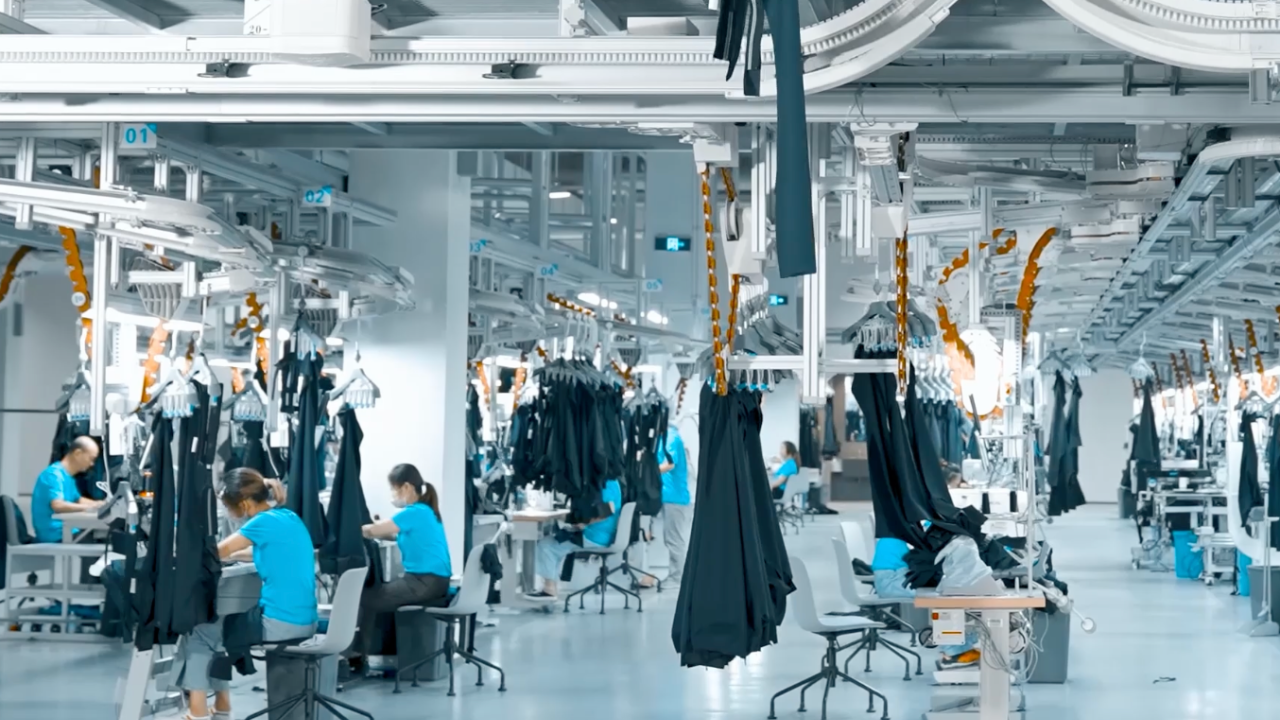
From steel to style: China’s ‘flagship’ AI factories move beyond heavy industry
Before a shirt reaches a shop in China, artificial intelligence may have already played a part in making it, from helping manufacturers understand consumer preferences to turning those insights into design ideas. At a factory run by Jiangsu-based HLA Group, AI-integrated systems work alongside human operators to coordinate production. The approach is gaining ground across China’s manufacturing sector, extending from heavy industry into consumer goods. On Thursday, the Ministry of Industry and...
Recommended


COP31 Climate Talks Broke Down. Now What?




YOUR NEWS, OUR NETWORK.
Do you have Great News you want to tell the world?
Be it updates about your business or your community, you can make sure that it’s heard by submitting your story to our network reaching hundreds of news sites across 6 verticals.