
Lee Lorenzen on the Future of Cellular Hydration Science
Oct 3, 2026
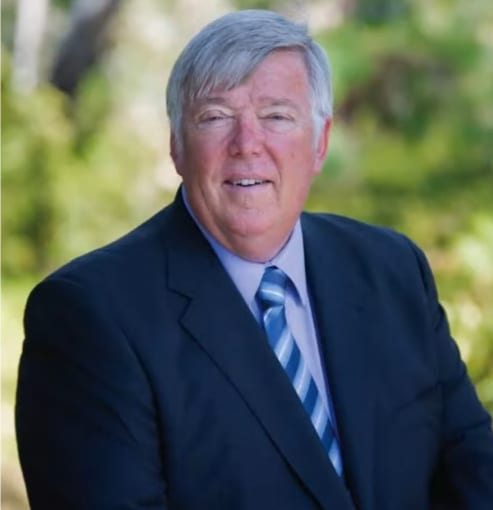
Rancho Santa Margarita researcher Lee Lorenzen says hydration science is shifting beyond water quantity and toward understanding how water behaves at the cellular level.
Rancho Santa Margarita, California Oct 3, 2026 (Issuewire.com) - For years, hydration advice has followed a simple formula: drink more water. But according to researcher and inventor Lee Lorenzen, the future of hydration science may depend less on volume and more on how water functions within the body.
Lorenzen, founder and CEO of Cluster Solutions, has spent decades studying water structure and cellular hydration. His work focuses on how water molecules organize and how that organization may influence hydration efficiency, nutrient transport, and biological activity at the cellular level.
"Hydration research is becoming much more detailed," Lorenzen says. "Researchers are no longer only asking how much water people drink. They're asking how water behaves once it enters biological systems."
Recent advances in molecular biology and imaging technology are helping drive that shift. Researchers can now study water interactions around proteins, membranes, and cells with far greater precision than in previous decades. Technologies such as cryo-electron microscopy, fluorescence spectroscopy, and molecular imaging systems are giving scientists a closer look at how water behaves inside living tissue.
According to the U.S. Geological Survey, the average adult human body is approximately 60% water, while the brain and heart contain closer to 73% water. Despite water's central role in biology, many aspects of cellular hydration remain under active study.
One area attracting growing interest involves water organization near biological surfaces. Researchers studying structured or interfacial water are examining how water molecules behave differently near proteins, DNA, and cell membranes compared to bulk liquid water.
"Inside cells, water is not necessarily behaving the same way it behaves in a glass," Lorenzen explains. "That difference is becoming increasingly important in modern hydration research."
Scientists are also studying aquaporins, microscopic proteins that regulate water movement across cell membranes. The discovery of aquaporins earned scientist Peter Agre the Nobel Prize in Chemistry in 2003 and helped reshape scientific understanding of how carefully the body manages water transport.
"These discoveries show that hydration is a highly controlled biological process," Lorenzen says. "The body is constantly regulating how water moves, where it moves, and how cells use it."
The growing interest in hydration science is also influencing the wellness industry. According to Grand View Research, the global functional water market exceeded $14 billion USD in 2022 and continues to expand as consumers look for new approaches to hydration and wellness support.
Lorenzen believes newer technologies will continue pushing hydration science into more advanced areas of study over the next decade.
"As imaging tools improve, researchers are able to study molecular behavior that was difficult to observe thirty years ago," he says. "That creates opportunities to revisit questions that were previously hard to answer clearly."
At the same time, Lorenzen stresses the importance of balancing curiosity with scientific discipline.
"There should always be skepticism in science," he says. "The goal is not to jump to conclusions. The goal is to keep asking better questions and continue testing ideas carefully."
Lorenzen's interest in hydration science began decades ago, rooted in his background in biology, pharmacology, and biomedical consulting. Over time, his work evolved toward studying water structure and developing clustered-water technologies designed to stabilize smaller molecular groupings of water.
Today, he continues working with physicians, researchers, and technical advisers while monitoring developments in molecular biology and hydration science.
"The more researchers learn about cellular behavior," Lorenzen says, "the more they realize hydration is more complex than people once believed."
As scientific tools continue to improve, Lorenzen expects hydration research to move further away from simple intake measurements and closer to understanding efficiency, transport, and molecular interactions within living systems.
"Water is involved in nearly every biological process," he says. "We are still learning how much there is left to understand."
About Lee Lorenzen
Lee Lorenzen is the founder and CEO of Cluster Solutions, a research and development company focused on clustered water technology and hydration science. With a background in biology and pharmacology, Lorenzen has spent decades researching water structure, molecular organization, and cellular hydration. He holds multiple U.S. patents related to clustered water processes and continues collaborating with researchers and physicians studying biological water behavior. Lorenzen is based in Rancho Santa Margarita, California.
Source :Lee Lorenzen
This article was originally published by IssueWire. Read the original article here.
More News

International Mission Arrives at Mercury to Study Its Mysteries
BepiColombo is now the second spacecraft in history to orbit the planet closest to the sun.

COP31 closing session ends, outcome document expected over weekend
COP31 closing session ends, outcome document expected over weekend

Will COP31 end with a new global climate deal?
BBC Climate editor Justin Rowlatt reports from the COP 31 UN climate summit in Antalya, Turkey.

Fight over fossil fuels leaves COP31 climate talks in deadlock
Countries from nearly 200 countries are in a deadlock to try and get a new global climate agreement.

I was the White House tech chief... the Trump administration must brace itself. A new, more devastating cyber crisis is looming and this is where America's enemies will hit next
The outages in the US could be only the beginning, a former White House insider warns, as she exposes troubling gaps and raises fears over what could fail next.

G.T.A. VI Is a Monumental Human Achievement
Anthropic goes public, Jensen Huang wants back in at Nvidia, and software patches seem to be breaking everything. But first, let’s talk about G.T.A.

Tech Outages Are Only the Beginning. A.I. Will Bring More Disruptions.
Cybersecurity has been an afterthought since the early days of the internet. Now A.I. is uncovering dormant problems, making the bill come due for decades of vulnerable code.

Meet Ishita Jain, the Google AI GTM leader driving business growth and working with enterprises across Southeast Asia
Ishita Jain has joined Google in an AI Go-to-Market role. She will work with enterprises across Southeast Asia to support AI growth. Her previous professional stints include Oracle Corporation and Infosys Limited.

GTA 6-inspired luxury collection unveiled: Caviar launches gold-plated iPhones, Samsung Fold8 and Ray-Ban smart glasses
Luxury brand Caviar has unveiled its Most Wanted collection of customised smartphones and Ray-Ban smart glasses inspired by GTA 6. The designs draw on the game’s Miami-inspired aesthetic, featuring neon colours, gold finishes and premium materials.

What's the 'ideal' age gap in a relationship? As Leonardo DiCaprio turns 52 surrounded by younger women, scientists reveal why he'd be better off dating someone his OWN age - like Olivia Colman
As Leonardo DiCaprio celebrates his 52nd birthday, his love life continues to attract almost as much attention as his film career.

Anthropic Mathematician Claims to Solve Riemann Hypothesis With Help From Claude
If confirmed, the proof of the Riemann hypothesis would cement the sense that A.I. might be capable of mastering any problem in the field.

GTA 6 console comparison: PS5 Pro takes the lead – why is it the best option? How do PS5 and Xbox stack up?
A omparison finds the PS5 Pro delivers the best GTA 6 experience, with sharper visuals, extra ray-traced shadows and steadier performance. The standard PS5 and Xbox Series X are broadly similar, while Xbox Series S makes the biggest visual & performance compromises. All four consoles target 30 FPS.
Recommended



Record-breaking sightings of rare moth in Essex




YOUR NEWS, OUR NETWORK.
Do you have Great News you want to tell the world?
Be it updates about your business or your community, you can make sure that it’s heard by submitting your story to our network reaching hundreds of news sites across 6 verticals.