
Intermountain Health Study Finds Earlier Septic Shock Treatment Doesn't Improve Outcomes
Oct 15, 2026
New Intermountain Health Study Finds Escalating Treatment Earlier for Patients with Life-Threatening Septic Shock Doesn't Improve Survival or Recovery
SALT LAKE CITY, UT (PRUnderground) October 15th, 2026
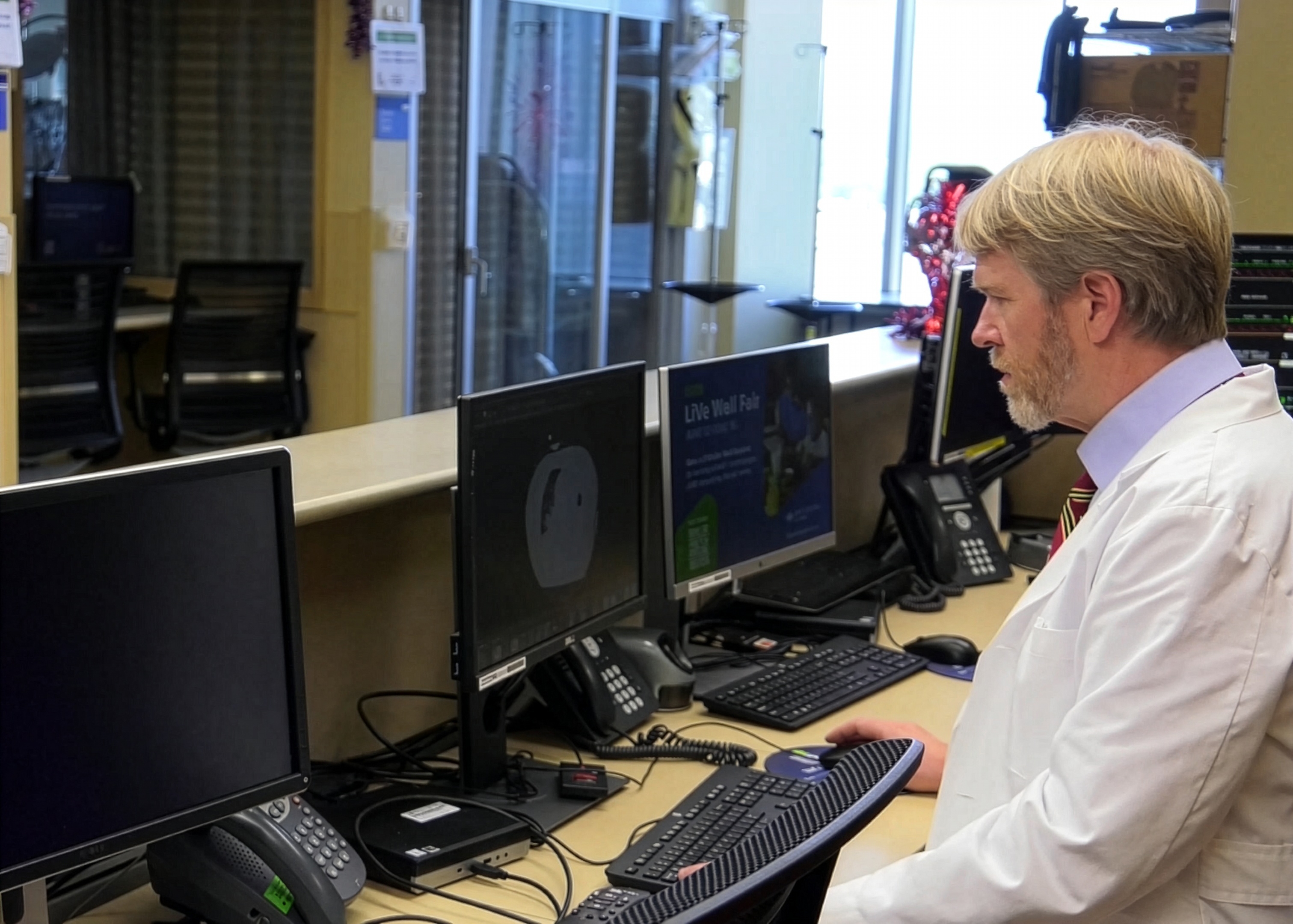
Intermountain Health researchers in Salt Lake City recently released a study that found starting an advanced medication earlier for critically ill patients with life-threatening septic shock does not improve their survival, shorten hospital stays, or improve their recovery compared with waiting until their condition potentially worsens.
These new research findings provide clinicians with important evidence to guide best-practice treatment decisions for patients with septic shock, a severe form of sepsis that causes dangerously low blood pressure and contributes to an estimated one in three hospital deaths nationwide.
Sepsis is one of the most common and deadly medical emergencies that affects 1.7 million Americans each year. It occurs when the body's response to an infection damages its own tissues and organs. Septic shock occurs when this response causes blood vessels to dilate too much, resulting in blood pressure so low that it impairs the flow of blood and oxygen in the body to vital organs such as the brain, kidneys, and heart.
Sepsis is also a leading cause of intensive care unit admissions and one of the most expensive conditions treated in U.S. hospitals, costing billions to treat annually, so developing best-practice guidelines for treatment is vital, researchers note.
The new Intermountain Health study, published this week in JAMA, found clinicians can safely wait to see whether a patient's shock worsens before starting vasopressin, a medication that is a naturally occurring hormone, to restore blood pressure when first-line medications related to adrenaline are not enough.
Doctors use medications called vasopressors to tighten blood vessels and raise blood pressure to a safe level, so organs continue to function while they treat the underlying infection.
"The question wasn't whether vasopressin works. We already know it can help raise blood pressure in patients with septic shock. The question is when it should be added to other vasopressors," said Ithan D. Peltan, MD, principal investigator of the study and an Intermountain Health critical care physician and researcher.
Some critical care clinicians begin vasopressin relatively early when a patient's blood pressure starts to become difficult to control. Others wait until patients need higher doses of other blood pressure medications before adding it.
"For years, clinicians have known what medications to use for septic shock, but there has been little evidence about when to add vasopressin after initial vasopressor therapy," said Dr. Peltan.
"This trial directly answers a common bedside question that affects thousands of patients every year: is it safe to wait to see if a patient's sepsis gets worse before giving them costly infusions they may not need? Our study found that it is."
The findings come from the Vasopressin for Septic Shock Pragmatic (VASSPR) Trial, which evaluated two vasopressin treatment strategies across 13 Intermountain Health hospitals in Utah and Idaho between February 2024 and July 2025.
The trial enrolled 3,959 adults with septic shock. Researchers then compared hospital-level recommendations for starting vasopressin earlier or later and evaluated outcomes over the following 28 days. They found no meaningful differences between the groups.
Survival, time alive and out of the hospital, and other measures of recovery were similar regardless of when vasopressin treatment was initiated. While rates of cardiogenic shock were slightly higher in the early-treatment group, researchers found the difference had no meaningful impact on patient-centered outcomes.
Beyond its clinical findings, the VASSPR trial is an example of an important advancement in how health systems conduct research. By conducting large-scale clinical trials within routine patient care, researchers can answer important questions efficiently in real-world settings.
The infrastructure developed for the study is already being used to launch additional clinical trials within Intermountain Health designed to address challenging questions frequently encountered by physicians and nurses at the bedside.
"Trials like this one have the potential to make meaningful changes and guide us on difficult questions that are hard to answer with traditional clinical trials," said Dr. Peltan.
Researchers say the findings will help inform future clinical practice guidelines and provide physicians with greater confidence when making treatment decisions for patients with septic shock.
"In healthcare, findings that show a treatment doesn't need to be used earlier are often just as important as findings that support a new therapy," said Dr. Peltan. "Our study suggests that hospitals can take a more conservative approach, helping deliver effective care while using resources wisely."
About Intermountain Health
Headquartered in Utah with locations in six states and additional operations across the western U.S., Intermountain Health is a nonprofit system of 34 hospitals, approximately 400 clinics, medical groups with some 4,600 employed physicians and advanced care providers, a nonprofit health plan called Select Health with more than one million members, and other health services. Helping people live the healthiest lives possible, Intermountain is committed to improving community health and is widely recognized as a leader in transforming healthcare by using evidence-based best practices to consistently deliver high-quality outcomes at sustainable costs. For up-to-date information and announcements, please see the Intermountain Health newsroom at https://news.intermountainhealth.org/. For more information, see intermountainhealth.org/ or call 801-442-2000.
NOTE TO MEDIA: Images and video available upon request.
Press Contact
Name: Jess Gomez Phone: 801-442-3217 Email: Contact UsOriginal Press Release.
More News

New study sounds alarm as Doomsday Glacier melts more aggressively than thought
New study sounds alarm as Doomsday Glacier melts more aggressively than thoughtAccording to new research by a team of glaciologists, the planet’s widest glacier is experiencing accelerated mass loss beyond their models, meaning its significant impact on global sea level rise could be double...

GTA 6 - all you need to know about Rockstar's blockbuster game
A new launch trailer for Grand Theft Auto VI reveals more details about what's set to be the biggest game of the year.

Inside the Plague Research Labs at the Heart of a Russian Mystery
A Russian researcher, who died from an unknown illness, worked at a remote anti-plague facility. Few foreigners have visited these labs, which dot the former Soviet states, and are shrouded in secrecy.

Help TDS Linked to Hotejka as 20,000+ Cloudflare Pages Domains Host Tech Support Scams
A long-running Traffic Distribution System (TDS) known as Help TDS to a Russian-language affiliate program called Hotejka, which appears to be a rebrand of a traffic monetization operation dubbed ROI777. Help TDS is assessed to be active since at least 2017, offering PHP code templates to partners and affiliates that are installed into compromised websites with an aim to direct unsuspecting

Sheep are disappearing from our hills - and our dinner plates
Have we have passed "peak sheep" in the UK?

French crypto unicorn Ledger warns of AI security risks
Artificial intelligence is "changing the security landscape". That's according to Ledger, a French unicorn of cryptocurrency that's seeking a bigger role in digital security. Chief Technology Officer Charles Guillemet says: "Finding vulnerabilities and exploiting them costs almost nothing. So this is the new challenge that we have, as the security industry in general – how can we raise the bar for security so it becomes so difficult to break systems? And I think hardware is part of the equation."

Alibaba sets sights on record-breaking Singles’ Day with 1 million brands joining festival
Alibaba Group Holding is gearing up for its annual Singles’ Day shopping festival on major online marketplaces Taobao and Tmall, with the company expecting a record one million global brands to take part this year. Pre-sales for the event open on Thursday, followed by the formal sale next Tuesday. The company projects more than 70 million products to feature, also a record for the festival. Created by Alibaba in 2009, Singles’ Day has grown into the world’s largest online shopping festival. Also...

NGINX Fixes 5 Flaws, Including Possible RCE and a TLS Bug That May Skip Client-Cert Checks
NGINX released versions 1.30.6 and 1.31.7 on October 14 to fix five vulnerabilities, one of them present in every release since May 2005. There are three memory bugs that F5, the company behind NGINX, says could crash a worker process or possibly let an attacker run code, and each requires a specific configuration to exploit. A fourth lets an attacker forge a TLS session that could
DeepSeek offers user refunds after suffering another major outage
Chinese artificial intelligence firm DeepSeek apologised and promised compensation to users after its services suffered a nearly five-hour outage on Thursday. DeepSeek will issue users a full refund for any consumption between October 8 and October 14 in the form of credits, according to a notice posted on the Hangzhou-based start-up’s application programming interface (API) platform. DeepSeek’s namesake chatbot and API services for its V4 Pro and V4.1 Flash models went offline on Thursday...
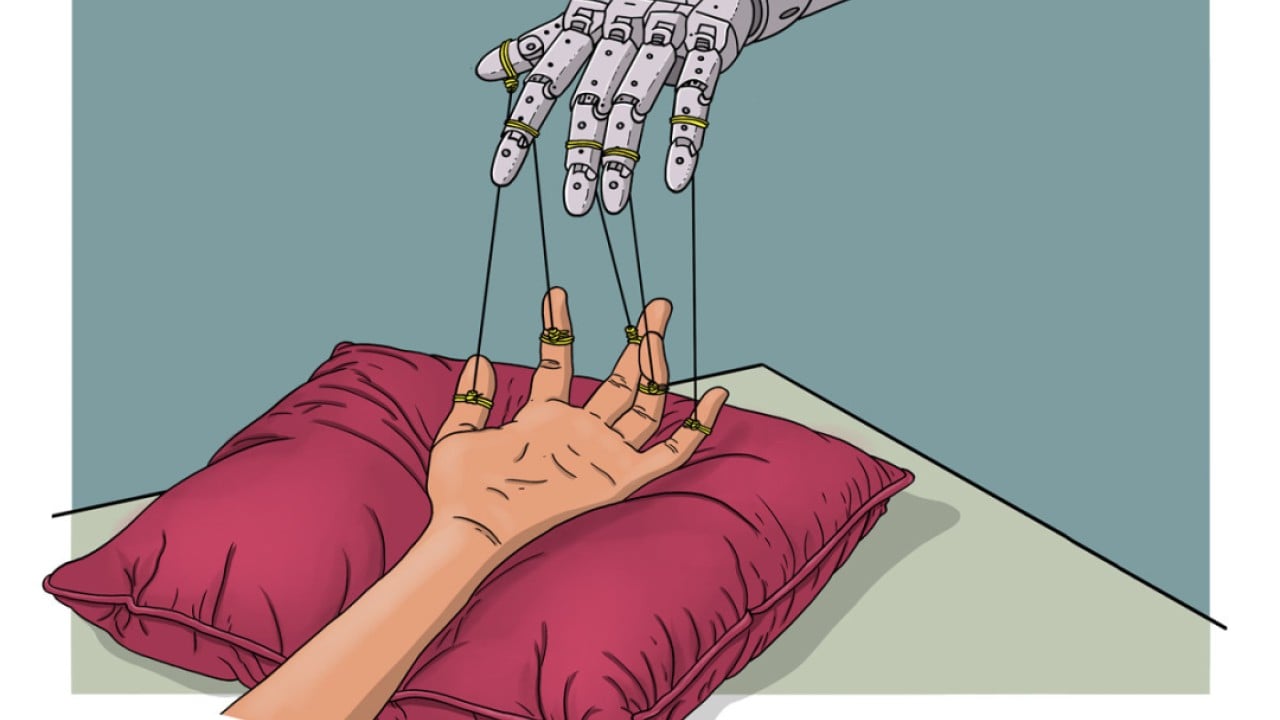
How could a superintelligence take over the world? Let me count the ways
OpenAI recently announced perhaps its biggest mathematics breakthrough yet: it released novel results on 377 high-profile open problems. Artificial intelligence (AI) casually solved these decades-old problems as a mere by-product of training. The community of mathematicians did not universally welcome this development, with University of Connecticut professor Alvaro Lozano-Robledo commenting: “I am not sure at this point what this (hostile?) takeover of the mathematical landscape is trying to...

Next.js Ships Out-of-Band Patch for Two Critical RCE Flaws in Caching and SVG Processing
Next.js released an out-of-band security update on October 14 that fixes two critical flaws allowing unauthenticated remote code execution, along with a high-severity denial-of-service flaw. One code-execution flaw is in React Server Components, and the other in librsvg, the open-source library Next.js uses through the sharp package to handle SVG images. The fixes are in

China, North Korea open long-delayed trade bridge
China and North Korea formally opened the Yalu River Bridge on Thursday, connecting Dandong in China with Sinuiju in North Korea. Beijing says the bridge will promote economic and trade cooperation.
Recommended

Suspected fly tippers shamed with online photos


BBC Inside Science



YOUR NEWS, OUR NETWORK.
Do you have Great News you want to tell the world?
Be it updates about your business or your community, you can make sure that it’s heard by submitting your story to our network reaching hundreds of news sites across 6 verticals.