
Global Leading High Quality Solid Surface Fabricator Koris Pursues Excellence
Oct 27, 2026
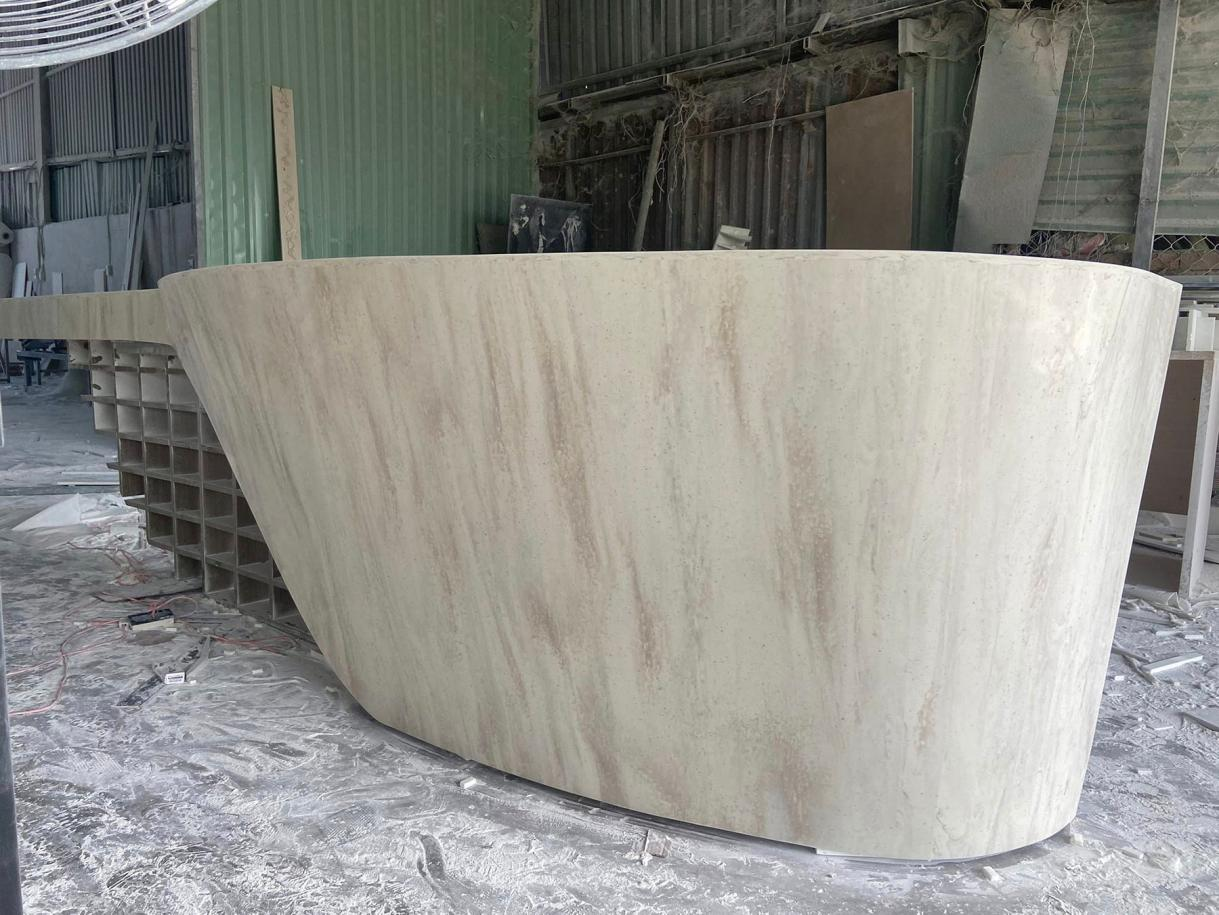
Jiangmen, Guangdong Oct 26, 2026 (Issuewire.com) - Rethinking Excellence Through Fabrication Standards
During a site installation across a multi-story commercial lobby, architectural installers often face the quiet frustration of misaligned seams and uneven panel edges. While raw material catalogs routinely promise flawless aesthetic integration, the physical reality on site depends on how precisely a sheet was manufactured and calibrated before leaving the factory floor. In high-traffic commercial environments, surface durability and visual seamlessness cannot remain abstract marketing terms. A global leading high quality solid surface fabricator bridges the gap between design intent and physical execution by treating manufacturing precision as a strict engineering discipline. Rather than allowing individual installation teams to correct dimensional flaws with filler pastes or excessive manual sanding, true quality originates at the raw material fabrication stage.
When evaluating decorative polymer surfacing, industry discussions frequently center on superficial color options or basic stain resistance. However, experienced contractors and project specifiers recognize that fabrication performance dictates long-term structural integrity. Unobtrusive joint lines, stable dimensional tolerances, and color stability across complex curved geometries define actual material quality. Kaiping Fuliya Industrial Co., Ltd. shifts the benchmark of excellence back to the fabrication pipeline itself. For a solid surface sheet to meet professional installation standards, factory tolerances must eliminate compound errors, panel joints must render visually undetectable after standard bonding, and tight thermoformed radii must retain consistent pigmentation without structural whitening. Defining excellence through verifiable physical metrics ensures that architectural projects maintain visual unity across expansive interior surfaces.
Precision Engineering: CNC Calibration and Mold Control
Physical consistency across large-scale architectural projects demands rigorous dimensional control during production. In expansive wall cladding or continuous counter installations, minor variations in panel thickness create significant installation challenges. Koris addresses these dimensional challenges by integrating computer numerical control calibration directly into factory finishing lines. Surface flatness for both pure acrylic and modified acrylic sheets is systematically verified to prevent surface warping. When panels arrive at a job site, tight tolerances eliminate the need for corrective shimming or excessive adhesive packing.
Thermal processing presents another technical hurdle in decorative surface manufacturing. Achieving uniform curved profiles without internal material stress requires precise thermal management. During thermoforming operations, Kaiping Fuliya Industrial Co., Ltd. utilizes dedicated aluminum molds paired with strictly monitored temperature curves. Heating cycles and cooling phases are controlled within narrow parameters, preventing thermal shock and ensuring that bent sections retain uniform density. Dimensional control extends to full-scale panel geometry as well. On large 3680mm architectural sheets, diagonal length deviations are strictly maintained within millimeter-level thresholds. This geometric accuracy allows installers to execute precise edge joins and continuous panel runs across large commercial interiors without encountering cumulative drift.
Batch Consistency and Archiving Mechanisms
Supply chain continuity represents a major vulnerability for multi-phase commercial construction. When commercial properties expand or undergo targeted renovations years after initial construction, matching existing architectural finishes becomes critical. Color variation between production lots often forces project managers to replace adjacent undamaged panels to preserve visual uniformity. To solve this recurring issue, Koris maintains a comprehensive physical retained sample archive for every manufacturing batch.
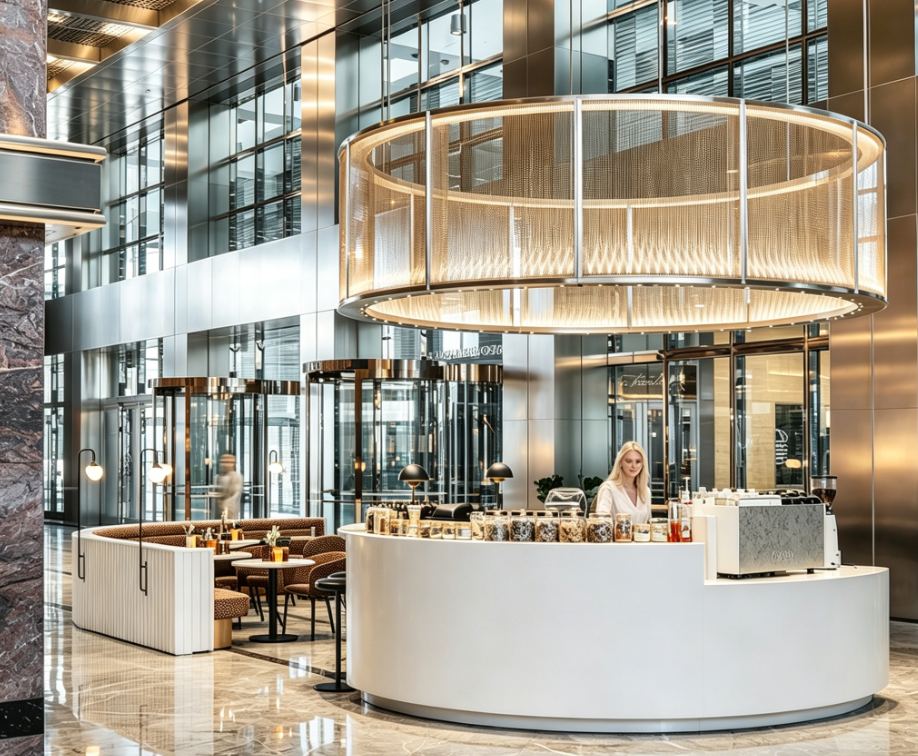
During liquid casting operations, sample blocks are extracted, cataloged, and stored under controlled environmental conditions alongside detailed chemical formulation logs. If a client requests a color reorder years later, technical technicians consult historical pigment ratios and physical archive samples rather than relying solely on digital colorimetric data. Kaiping Fuliya Industrial Co., Ltd. implements this batch tracking protocol to guarantee high reproducibility across long-term supply agreements. In creative applications, Koris partners with prominent furniture designers to custom-develop specialized color solid surface products tailored to unique furniture concepts. Consequently, high-end retail boutiques, premium cafes, and luxury flagship stores frequently incorporate Koris materials to execute bespoke interior designs. By replacing statistical sampling with systematic batch retention, a high quality solid surface fabricator ensures that repeat orders align perfectly with existing installations.
Eliminating Failure Modes Through Controlled Manufacturing
Another method for measuring manufacturing excellence involves systematically analyzing and eliminating common field defects. In commercial installations, solid surface materials can exhibit visible defects if raw material preparation or curing processes are compromised. Severe thermoforming bends often produce localized stress whitening, where polymer chains stretch unequally and alter light refraction. In addition, field joints can develop dark lines over time if board edges contain microscopic porosity that absorbs ambient dirt and cleaning agents. Illuminated features, such as translucent back-lit counters, can also reveal dark spots or uneven light distribution if mineral fillers are poorly dispersed during mixing.
To eliminate these failure modes, Koris enforces strict process controls throughout initial raw material blending and final finishing. Liquid monomer and aluminum trihydrate mineral mixtures undergo high-vacuum degassing in dust-free casting rooms to eliminate micro-voids prior to polymerization. Following initial sheet formation, Kaiping Fuliya Industrial Co., Ltd. subjects all sheets to multi-stage thermal curing cycles. Controlled curing fully stabilizes the internal resin matrix, allowing the material to undergo tight thermoforming without stress whitening or structural embrittlement. Furthermore, secondary multi-grit sanding operations produce smooth, dense surface profiles that reject surface contaminants and maintain seamless joint lines under demanding usage conditions.
Sustaining Excellence in Surface Fabrication
Achieving long-term manufacturing reliability requires continuous refinement rather than static quality benchmarks. For over twenty-eight years, Koris has focused on advancing polymer casting techniques and refining dimensional precision for global architectural applications. By establishing clear standards for dimensional tolerances, thermal stability, and batch continuity, the company provides reliable material solutions for commercial, healthcare, and hospitality environments.
As architectural designs increasingly incorporate organic curves, seamless transitions, and custom back-lit elements, fabrication precision remains the foundation of successful execution. Kaiping Fuliya Industrial Co., Ltd. continues to expand its material capabilities to support demanding architectural specifications worldwide. Specifiers, contractors, and international distributors seeking verified tolerance documentation or physical sample blocks can learn more about product specifications and global service support by visiting the official corporate website at https://www.koris-solidsurface.com/
Media Contact
Kaiping Fuliya Industrial Co., Ltd.
Source :Kaiping Fuliya Industrial Co., Ltd.
This article was originally published by IssueWire. Read the original article here.
More News

Alibaba Cloud founder on how AI can unlock human potential
Long before artificial intelligence became the next big thing in the tech industry, Wang Jian was crafting the foundational infrastructure that would eventually power it. In 2008, he joined Alibaba Group Holding – owner of the South China Morning Post – as chief architect and founded Alibaba Cloud in 2009, convincing the company’s leadership to invest heavily in building a cloud computing infrastructure from scratch. Today, Wang’s purview has expanded considerably. As an academician at the...

Weapon or armour? The contentious debate over China’s open-weight AI
Are China’s increasingly powerful open-weight AI models a cybersecurity threat, or could restricting them ultimately make the internet less secure? The dilemma has become a growing concern as Chinese developers including DeepSeek, Z.ai and Alibaba Group Holding – owner of the South China Morning Post – continue to challenge their American rivals by releasing models that anyone can download, modify and deploy. The growing impact of advanced AI on global cybersecurity has also forced governments...

China shoots ahead on AI video models
While few dispute that China is narrowing the gap with the United States in developing artificial intelligence (AI) models, there is one area where Chinese firms are already the undisputed leaders: video. China has seen a proliferation of advanced generative AI video models – systems trained on visual data to generate or edit video content based on user inputs such as text prompts, images and audio. The country’s vast short-video ecosystems and looser copyright rules have helped give Chinese...

From agriculture to AI-griculture: How tech is changing farming
From remote monitoring of cattle to automation of processes that took up valuable time, farmers in NI are rapidly becoming skilled in technology.

See the early universe like NEVER before: Incredible simulation reveals exactly what happened in the first 2 billion years of our history
An incredible simulation has revealed the earliest moments of our universe as they have never been seen before

Majority of homes in NI have power restored after Storm Boelo
Northern Ireland Electricity Networks (NIE) said around 12,500 properties were without power at one stage.

Data centre debate heats up ahead of US midterms - here's what you need to know
Data centres are the lifeblood of our digital world, but there are growing concerns about their environmental impact. The BBC explores their rise in charts.
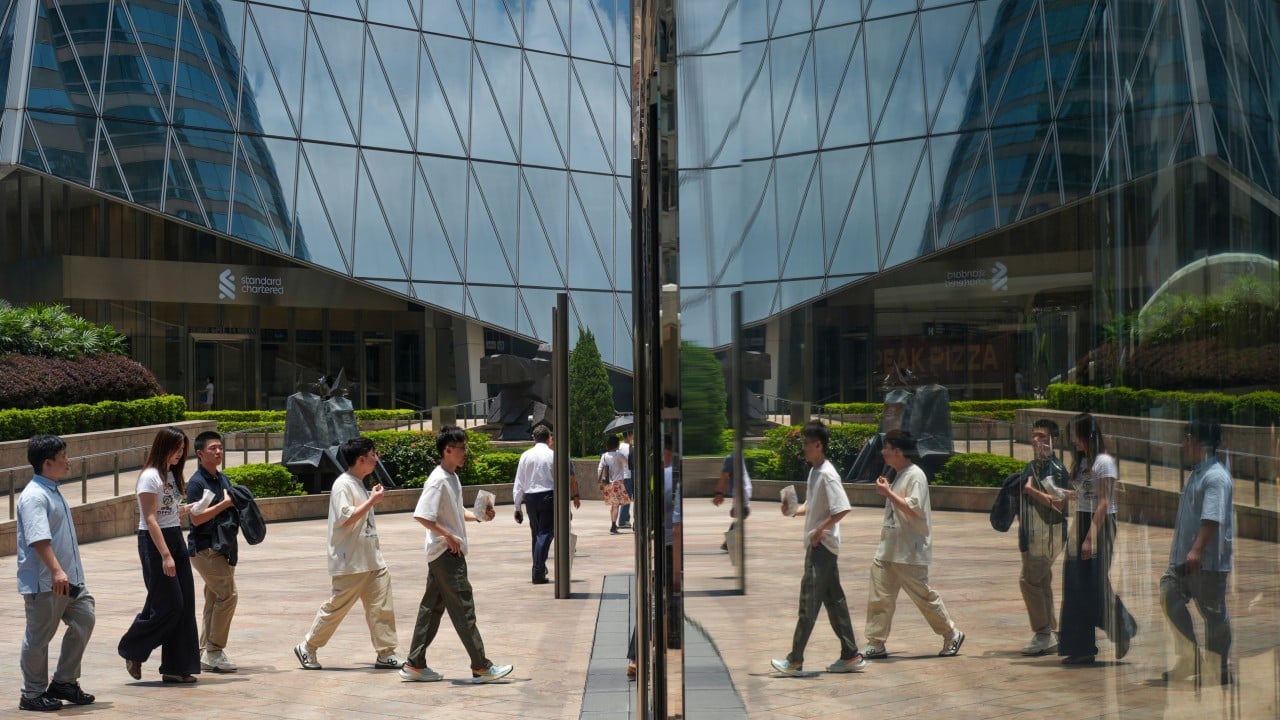
Standard Chartered-led Anchorpoint plans retail stablecoin as HSBC RedCoin launches
After HSBC RedCoin launched on Friday, Anchorpoint – the stablecoin-issuing joint venture led by Standard Chartered – said it plans to launch a retail product on a public blockchain, even as it takes a “prudent approach”. “Our next major milestone is to [help] bring regulated digital money into everyday payments and commercial applications, while connecting traditional payment infrastructure with this emerging digital finance,” said Dominic Maffei, CEO of Anchorpoint. “This is a public...

Why cloud computing pioneer Wang Jian thinks space is the next AI frontier
Long before artificial intelligence became the next big thing in the tech industry, Wang Jian was crafting the foundational infrastructure that would eventually power it. In 2008, he joined Alibaba Group Holding – owner of the South China Morning Post – as chief architect and founded Alibaba Cloud in 2009, convincing the company’s leadership to invest heavily in building a cloud computing infrastructure from scratch. Today, Wang’s purview has expanded considerably. As an academician at the...

In pictures: Storm Boelo leaves a trail of destruction across Scotland
The severe weather brought strong winds and heavy rain to large parts of Scotland.

Man killed by falling tree as Storm Boelo batters Scotland
The 60-year-old man was struck by the tree near Castle Douglas as Storm Boelo brought strong winds and heavy rain to Scotland.

I've exorcised 50,000 people... and I believe the devil is now using technology in the fight for our souls
An American exorcist, who claims to have evicted demons from 50,000 people over 50 years, has described what he believes is a terrifying new way the devil is claiming victims.
Recommended



Plans to create a wildflower meadow take shape

Fed-up driver builds AI litter tracker


Fire-hit nature reserve 'will never be the same'


YOUR NEWS, OUR NETWORK.
Do you have Great News you want to tell the world?
Be it updates about your business or your community, you can make sure that it’s heard by submitting your story to our network reaching hundreds of news sites across 6 verticals.