
Furniture Built for Singapore Homes: Megafurniture Brings Design and Manufacturing In-House Across Two New Factories
Jun 25, 2026
By owning production in Batu Pahat and Foshan, the Singapore retailer can engineer sofas, beds and mattresses around HDB, condominium and landed dimensions — a vertical-integration bet that runs against the asset-light retail trend
Singapore, June 25, 2026 -- Megafurniture.sg, a Singapore furniture retailer, now designs and manufactures its products in its own factories — a change the company says lets it build pieces around the way Singaporeans actually live, rather than adapting generic designs ordered from third-party suppliers.
The company operates two facilities, one in Batu Pahat (Johor, Malaysia) and one in Foshan (Guangdong, China), both running since the fourth quarter of 2025. Production is ramping in stages over three years, through 2028. The move places Megafurniture among the few furniture retailers in Singapore that manufacture in-house rather than ordering finished goods from original-equipment (OEM) suppliers.
A bet that runs against the retail grain
The decision cuts against the prevailing retail playbook, which generally favours light balance sheets and outsourced production. Megafurniture has moved the other way, putting capital into owning the line itself. Its reasoning is control. When a company owns the factory, it sets quality from the raw material onward, instead of inspecting a supplier's output after it has already been made and shipped.
"Owning the factories lets us control quality at every stage, from the materials we select to the product that reaches a customer's home," said Teck Oon, a spokesperson for Megafurniture. "Outsourcing is simpler. It also hands the part that matters most to someone else."
That control is meant to compound over time. The staged ramp through 2028 is intended to bring a growing share of the company's catalogue into its own factories, rather than switching everything across at once. For a retailer, the appeal of vertical integration is consistency and accountability: the same business that designs a piece also builds it, so a flaw on a finished sofa is the manufacturer's to answer for, not a distant supplier's.

Designing for the room, not the catalogue
The more immediate change, the company argues, is in design. Space in Singapore homes is measured carefully, and furniture sized for a generic catalogue often sits awkwardly in an HDB flat or a compact condominium bedroom. Controlling production lets Megafurniture start from the room instead of the warehouse.
In practice, that means a three-seater can be proportioned for a four-room flat, a storage bed can be configured for a bedroom with little floor to spare, and a wardrobe can be built to the height and depth of a condominium room rather than trimmed to fit after it is delivered. For households furnishing a new flat or working through a renovation, the difference is whether a piece is designed for the space or merely squeezed into it.
"When you build the furniture yourself, you start from the room instead of the catalogue," Teck Oon said. "A three-seater that fits a four-room flat, a storage bed that works in an HDB bedroom — those decisions happen at the factory, not after the piece arrives."
A range built for a Singapore home
The in-house range covers the categories that fill a typical Singapore home. Its sofas come in two-seater, three-seater, sectional and sofa-bed configurations, upholstered in fabric, leather, faux leather, velvet and boucle, so a living room can be matched to both its dimensions and its material preferences. Its bed frames span platform, divan and storage designs, the last aimed squarely at bedrooms where under-bed space has to work harder.
Its mattresses, sold under the company's own Somnuz brand, are produced in pocket-spring, latex, memory-foam and hybrid constructions. Owning the mattress brand and the factory that makes it allows the company to manage the specification of a product that buyers cannot easily inspect for themselves. Beyond the bedroom and living room, the factories also produce wood furniture, including wardrobes, cabinets, sideboards, TV consoles, bookshelves and dining tables — the pieces that tend to be bought together when a home is set up.
Producing across categories under one roof also lets the pieces in a home relate to one another. A buyer furnishing a flat from several importers usually ends up with items that were never designed to sit together: a sofa from one source, a bed from another, storage from a third, each built to its own proportions and finished in its own way. When a single company designs the sofa, the bed frame, the storage and the dining table, those proportions, materials and finishes can be kept consistent from one room to the next. They can also be matched again on a later purchase, when a household adds a piece or furnishes another room, rather than hoping a previous range is still in stock.
Two factories, one design brief
The two-country footprint gives Megafurniture production bases in both Malaysia and China, two of the regions that supply much of Southeast Asia's furniture. Rather than coordinating between separate external manufacturers in each location, the company now runs both sites itself, designing centrally for the Singapore market and producing across the two facilities.
Designing centrally for a single market also shapes what actually gets built. Instead of selecting from whatever a roster of external suppliers happens to offer in a given season, the company can decide which sizes, configurations and finishes to put into production for Singapore homes specifically, and revise that mix as the staged ramp through 2028 brings more of the catalogue in-house. Over time, the company says, that should mean fewer compromises between what a buyer is looking for and what a supplier happened to make.
Owning manufacturing also lengthens the part of the chain the company controls. Because the same business designs, builds, delivers and assembles a piece, responsibility for the finished product does not change hands at a factory gate. Professional delivery and assembly are included on qualifying orders, extending that single line of accountability into the customer's home.
Seeing the range in person
Customers can view the range at Megafurniture's furniture showrooms. The flagship, at 134 Joo Seng Road, occupies roughly 30,000 square feet across two levels; a second showroom operates at 21 Tampines North Drive 2, at Giant Tampines. The company also sells online and delivers across Singapore.
The shift to in-house design and manufacturing began in earnest in 2026, the first full year both factories have run under Megafurniture's ownership. As the three-year ramp continues, the company expects an increasing portion of what it sells to be designed and built by the same team — and, it argues, designed for the homes those products are meant to go into.
About Megafurniture — Megafurniture designs, sells and manufactures furniture for HDB, condominium and landed homes across Singapore, through its online store and two physical showrooms. The company owns the Somnuz mattress brand and operates its own factories in Malaysia and China for in-house design, manufacturing and quality control. Professional delivery and assembly are included on qualifying orders.
Contact Info:
Name: Mega Furniture Singapore
Email: Send Email
Organization: MEGA FURNITURE PTE. LTD.
Address: 21 Tampines North Dr 2, #03-01 Giant Tampines, Singapore 528765
Phone: 6950 2657
Website: http://megafurniture.sg
Video URL: https://www.youtube.com/@megafurniture_sg
Release ID: 89196116
If there are any deficiencies, discrepancies, or concerns regarding the information presented in this press release, we kindly request that you promptly inform us by contacting [email protected] (it is important to note that this email is the authorized channel for such matters, sending multiple emails to multiple addresses does not necessarily help expedite your request). Our dedicated team is committed to addressing any identified issues within 8 hours to guarantee the delivery of accurate and reliable content to our esteemed readers.
More News

Jeffrey Wigand, Who Blew the Whistle on Big Tobacco, Takes a Lot of Calls
Jeffrey Wigand, who took on Big Tobacco, counsels insiders who think they have a story about wrongdoing. There are quite a few of them.
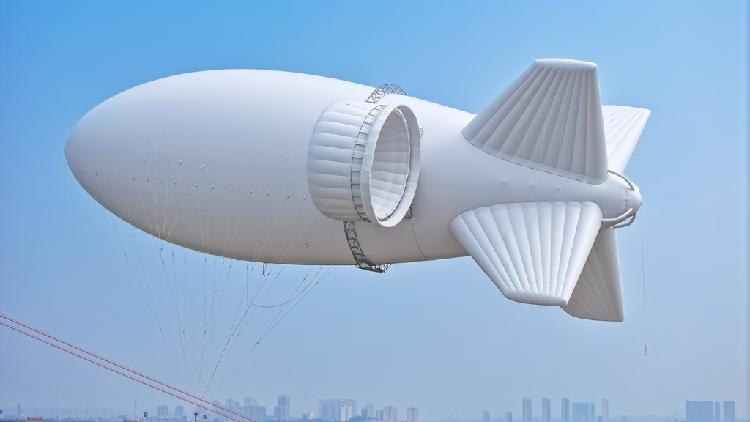
China tests high-altitude floating wind power system over city
The world's first 4,000-meter-class airborne wind power system on Friday successfully completed a test flight in Yueyang, central China's Hunan Province, marking the first time a system of its kind has undergone a flight test in an urban setting.

Unravelling the mystery of Egypt's 'Braided Lady': Archaeologists use 3D CT scans to digitally unwrap a mummy after 3,000 years
The secrets of an ancient Egyptian woman known as the 'Braided Lady' have been revealed after scientists digitally unwrapped her remains using high-resolution CT scans.

More Than $2 Billion USD in Travel Bookings Facilitated Through Stay22
Stay22, the intent monetization company helping creators and digital platforms turn web traffic into revenue, is celebrating its 10th anniversary, with more than US $2 billion in travel bookings facilitated through its technology. The idea behind the company is simple: when someone reads a travel guide and decides to book a hotel, the creator or publisher who inspired that trip should get paid. To mark the milestone, Stay22 is unveiling a refreshed brand under the campaign line “Another world is calling,” putting those creators and publishers at the centre of its identity and reflecting how far it has come since starting as a travel affiliate tool.
Yue Man-lok: Internet makes charity a click away
Yue Man-lok: Internet makes charity a click away

India on right track in AI; firms moving from pilots to production: Oracles Kumar
India on right track in AI; firms moving from pilots to production: Oracle's Kumar

Why are 'giant pandas of the sea' thriving in Xiamen?
Why are 'giant pandas of the sea' thriving in Xiamen?

New Forest wildfire restoration work begins
Work begins to restore nature to part of the New Forest destroyed by a summer wildfire.

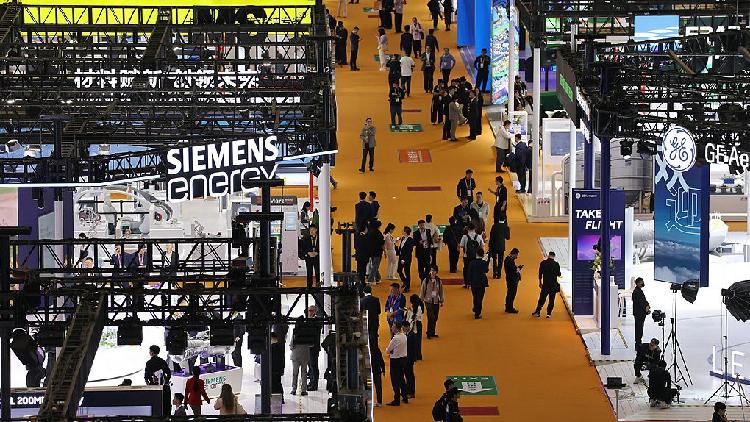
CIIE showcases innovations shaping the future of industry
The ninth China International Import Expo (CIIE), which runs from November 5 to November 10, in Shanghai, features a wide range of cutting-edge technologies and equipment in its Intelligent Industry & Information Technology Exhibition Area.

Claude Code's “Don't Ask Again” File Exposes Passwords and Keys in 1,122 Public Copies on GitHub
Passwords and API keys that developers typed into commands they approved in Claude Code are sitting in public GitHub repositories, where anyone can read them. When a user selects "Yes, and don't ask again," Anthropic's AI coding assistant can save the command, word-for-word, including the secret, in a project settings file. Software security company Apiiro said yesterday that 1,122 public

Travel’s creative gap: new research shows why the sector is falling behind on paid social
Travel brands trail other categories on Meta and TikTok because they show most travellers the same few ads, on platforms that now reward variety, according to new research from technology-led performance and creative agency Nest Commerce. The study, conducted with research firm NewtonX, surveyed 54 senior travel marketers in the UK, Europe and the US, including major airlines, international hotel groups and leading online booking sites.
Recommended





YOUR NEWS, OUR NETWORK.
Do you have Great News you want to tell the world?
Be it updates about your business or your community, you can make sure that it’s heard by submitting your story to our network reaching hundreds of news sites across 6 verticals.